The Hidden Revenue Crisis in Indian Hospitals
Walk into almost any 30–150 bed hospital in India and ask the owner what keeps them up at night. It's rarely patient footfall. It's the money they've already earned but haven't received — stuck in a TPA's queue, denied over a missing document, or short-paid with nobody chasing the difference.
As cashless treatment and insurance penetration grow, a larger share of every hospital's revenue depends on claims being approved and paid on time. A cashless request can bounce at admission. A claim can be denied at discharge, forcing the patient to pay upfront. A settled amount can arrive lower than billed, with the shortfall silently written off. Multiply this across hundreds of claims a month, and the leak becomes a flood.
Why Do Hospital Insurance Claims Get Denied in India?
Most claim denials are not due to genuine ineligibility — they're caused by avoidable errors that slip through manual, overstretched billing processes. The most common reasons include:
- Documentation errors — a typo in the discharge summary, an illegible bill, a missing report, or a mismatched date
- Incomplete pre-authorization — the cashless request is missing a required field, signature, or supporting document
- Policy and eligibility mismatches — the treatment, sum insured, or sub-limit doesn't align with the patient's policy
- Coding and tariff errors — incorrect procedure codes or package rates under a scheme
- Missed timelines — pre-auth or final-bill submission windows missed under the pressure of a busy ward
- Payer-specific rules — every TPA and scheme has its own formats and requirements, and no billing clerk can master them all
The deeper issue is when these errors are caught. In most hospitals, a mistake only surfaces after the payer rejects the claim — when recovery is slow, manual, and frequently abandoned. India still processes the vast majority of claims by hand, while developed markets auto-adjudicate over 90%. Every manual touch is a chance for an error and a delay.
The Real Cost of Denied and Delayed Claims
Industry reporting paints a clear picture of how much revenue is at stake across Indian healthcare: over ₹26,000 crore in health claims reported rejected in a single year; typical PMJAY payment delays to hospitals of 3–12 months; less than 10% of claims auto-adjudicated in India versus over 90% globally; and lakhs routinely locked in pending claims per hospital.
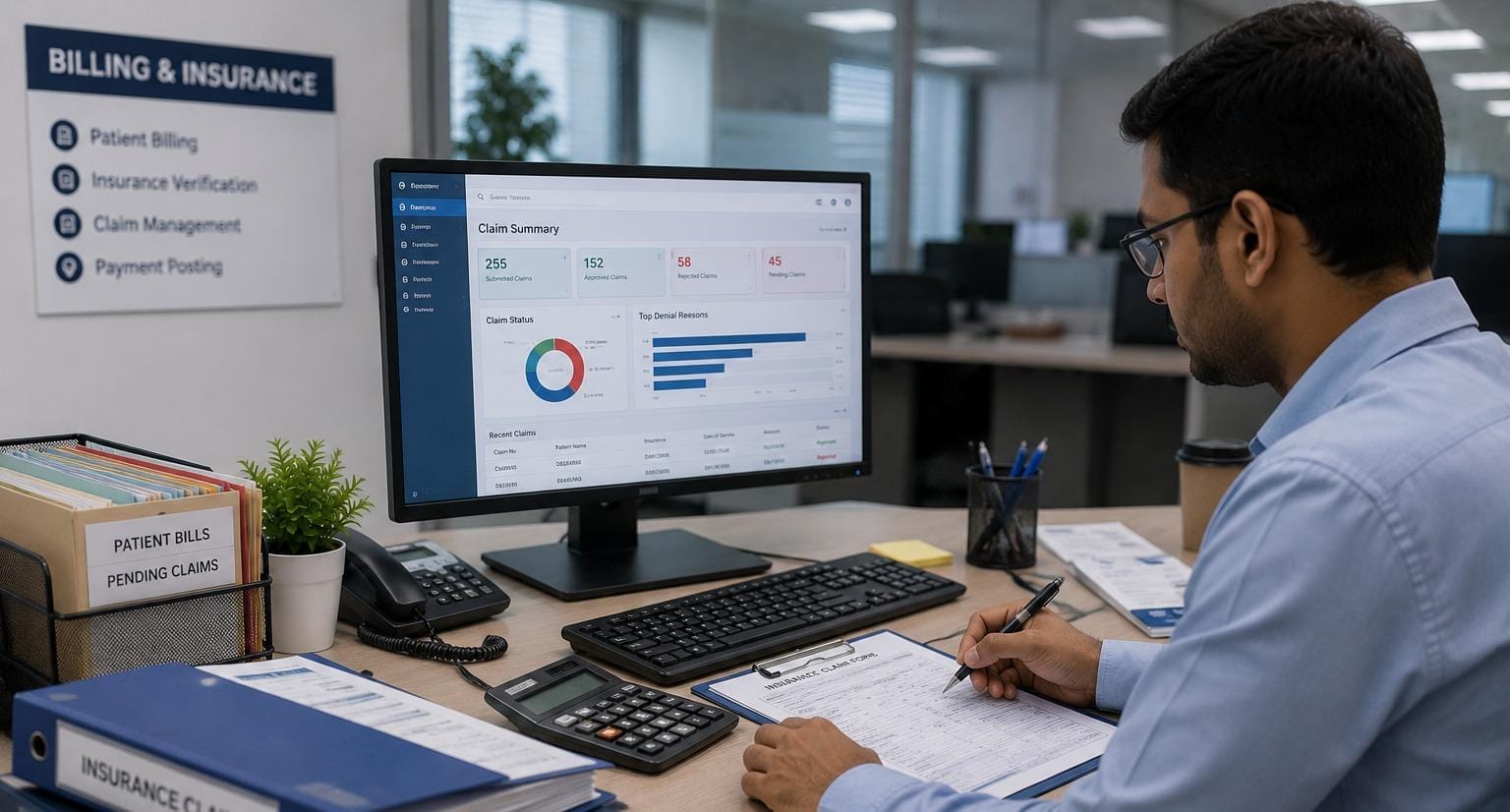
For an individual hospital, this translates into ₹20–30 lakh — sometimes crores — tied up in pending and disputed claims at any given time. That's salaries delayed, medicines unbought, and expansion plans frozen. On top of the lost money, billing staff burn hours every week logging into a dozen different TPA portals just to check claim status and chase follow-ups.
What Is MedXL ClaimWise?
MedXL ClaimWise is an AI-powered claims validation and denial-prevention platform purpose-built for Indian hospitals. It validates every cashless, TPA, and PMJAY claim against payer and scheme rules before the claim is ever submitted — catching the missing document or mismatch that causes a denial, tracking each claim live to settlement, automatically building appeals for rejected claims, and reconciling what was actually paid against what was approved.
In short, ClaimWise shifts a hospital from fixing denials after they happen to preventing them at the source — turning the hospital's biggest revenue leak into its most predictable revenue stream. It works alongside MedXL's wider suite of hospital IT solutions, including our Hospital Management System (HMS) and Electronic Health Records (EHR).
How MedXL ClaimWise Helps Hospitals Get Paid Faster
ClaimWise works across the entire claim journey — from the moment an insured patient is admitted to the moment the hospital's account is reconciled.
1. Validates Every Claim Before Submission
The core of ClaimWise. It checks each cashless, TPA, and PMJAY packet against that payer's specific rules — flagging missing documents, coding errors, and mismatches before you hit submit. This alone prevents the majority of avoidable denials.
2. Puts Every Claim in One Unified Queue
All claims, across every payer and scheme, in a single intelligent inbox — auto-classified and prioritised, integrated with your HMS so nothing is re-typed. Staff handle exceptions, not every case.
3. Tracks Every Claim Live to Settlement
Real-time status from pre-authorization to bank credit, across all TPAs and NHCX — ending portal-hopping and follow-up calls. Ageing alerts flag claims that have been stuck too long.
4. Recovers Denied Claims Automatically
When a claim is denied or short-paid, ClaimWise instantly generates a payer-specific appeal with the supporting documents and resubmits — turning weeks of manual recovery into hours.
5. Reconciles Payments and Reveals Root Causes
It matches the amount settled against what was billed and approved, flags every shortfall, and shows which payers, codes, and gaps drive your denials — so you fix the root cause and stop writing off revenue silently.
Why Now? NHCX and the Digital Claims Shift
There has never been a better moment for hospitals to fix their claims process, because the government has just rebuilt the rails. The National Health Claims Exchange (NHCX), built by the National Health Authority with IRDAI, is a single digital gateway connecting hospitals, insurers, TPAs, and government schemes on one standardised protocol.
Alongside it, IRDAI now mandates that cashless claims be cleared within three hours of discharge, and hospitals can earn an incentive of ₹500 (or 10% of claim value) per digital claim under the Digital Health Incentive Scheme. Nearly the entire retail health-insurance market has already connected to NHCX.
Which Hospitals Benefit Most from ClaimWise?
- PMJAY and scheme-empanelled hospitals battling long payment delays and high rejection from documentation gaps
- High-cashless mid-sized hospitals (50–150 beds) where insurance is the majority of revenue and denials hit cash flow hardest
- Single-specialty surgical centres — ortho, cardiac, eye, maternity — where a single high-value claim denial can mean lakhs lost
- New hospitals that want their claims process done right from day one, with no legacy habits to unlearn
How MedXL Helps Hospitals
MedXL ClaimWise is part of MedXL's wider suite of hospital IT solutions. Our full offering for hospitals includes:
- MedXL ClaimWise — AI-powered claims validation and denial prevention
- Hospital Management System (HMS)
- Electronic Health Records (EHR)
- Laboratory Information System (LIS)
- Online Appointment Booking
- Professional Hospital Websites
- Healthcare Digital Transformation Services
Frequently Asked Questions
Conclusion
Claim denials and delays aren't an unavoidable cost of running a hospital in India — they're a solvable problem. The hospitals that move from chasing denials to preventing them will protect their cash flow, free up their staff, and gain something most never had before: full visibility of every rupee they're owed.