Introduction
A hospital's website is often the first interaction a patient has with your facility — long before they walk through the door. In 2026, patients expect more than a static page with your address and phone number; they expect a fast, informative, and functional digital experience. Here are five features every hospital website must have to meet modern patient expectations.
Why Your Hospital Website Matters
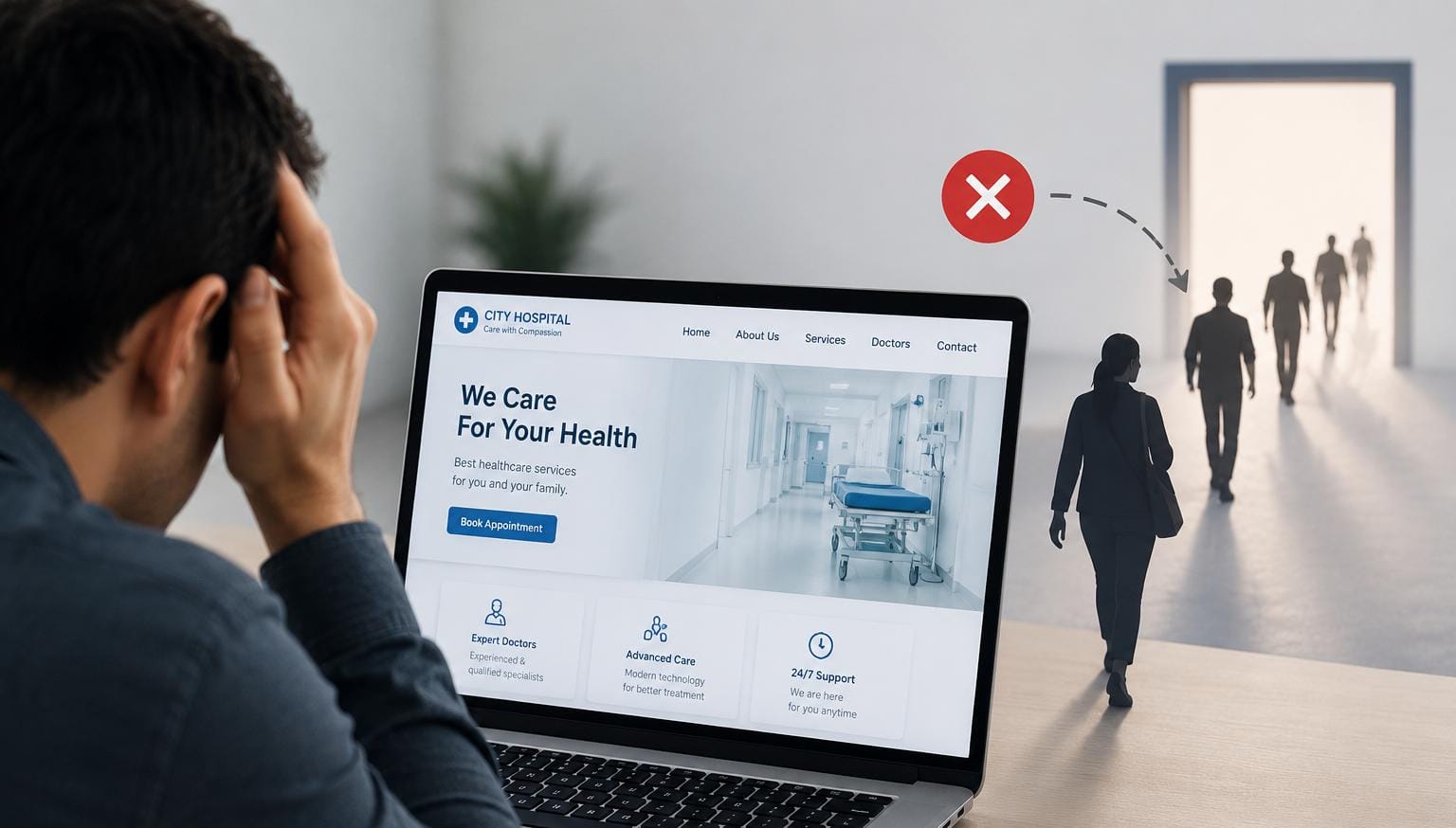
Today, most patients research a hospital online before booking an appointment or visiting in person. A poorly designed, outdated, or slow website can cost you patients — regardless of how good your medical care actually is. Your website isn't just a brochure; it's a functional extension of your patient experience.
What Patients Actually Expect from a Hospital Website
Patient expectations around healthcare websites have shifted significantly in recent years. Research shows that around two-thirds of patients now expect to be able to book a medical appointment directly online — a sharp rise from a decade ago — and a similar share say they actively prefer booking online over calling a front desk. For a hospital website, that's no longer a "nice-to-have" feature; it's close to the baseline patients are evaluating you against before they even pick up the phone.
The 5 Must-Have Features
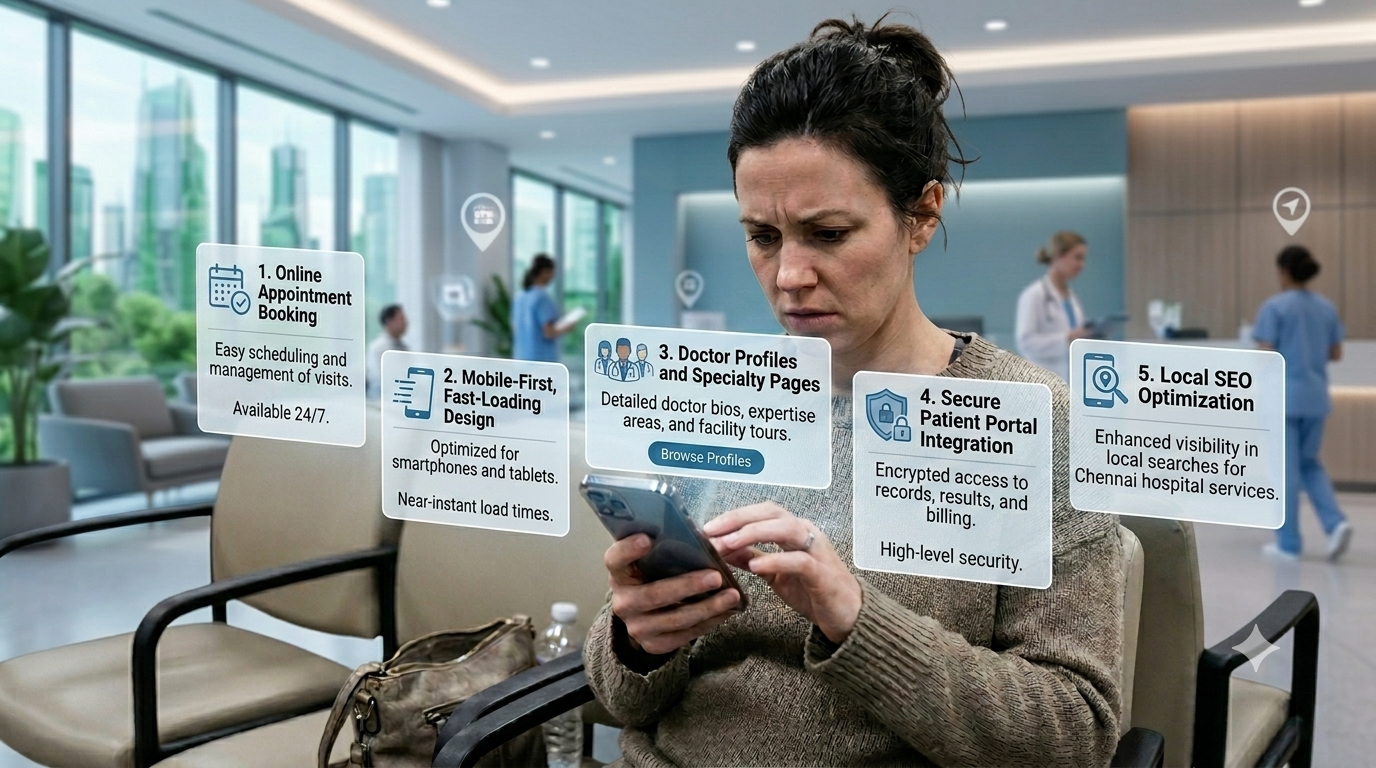
1. Online Appointment Booking
Patients should be able to book appointments directly from your website, without phone calls or waiting on hold. Real-time slot availability and instant confirmation reduce friction and missed opportunities.
2. Mobile-First, Fast-Loading Design
With most patients browsing from their phones, your website must load quickly and work seamlessly on smaller screens. A slow or cluttered mobile experience drives visitors away within seconds.
3. Doctor Profiles and Specialty Pages
Patients want to know who they're seeing before they book. Clear doctor profiles with qualifications, specialties, and availability — alongside dedicated pages for each department — build trust and help patients choose the right care.
4. Secure Patient Portal Integration
A website connected to your HMS or EHR allows patients to view reports, past visits, and prescriptions securely online, reducing front-desk workload and improving the patient experience.
5. Local SEO Optimization
Your website needs to be discoverable. Proper SEO — accurate location pages, fast load times, and structured data — ensures your hospital appears when nearby patients search for care.
How MedXL Helps Hospitals
At MedXL, we build professional, mobile-first hospital websites designed specifically for healthcare. Our website solutions include:
- Hospital Website Design & Development
- Online Appointment Booking Integration
- EHR/HMS-Connected Patient Portals
- Doctor and Department Profile Pages
- Local SEO & Digital Visibility
- Ongoing Hosting & Maintenance
Frequently Asked Questions
Conclusion
In 2026, your hospital's website is as important as your front desk — it's often the deciding factor in whether a patient chooses your hospital or moves on to the next search result. Investing in the right features isn't optional anymore; it's essential.