Introduction
EMR and EHR are two of the most commonly used — and most commonly confused — terms in healthcare technology. While they sound similar and are sometimes used interchangeably, they refer to different levels of patient data management. Understanding the difference is essential for hospitals deciding which system to invest in.
What Is an EMR?
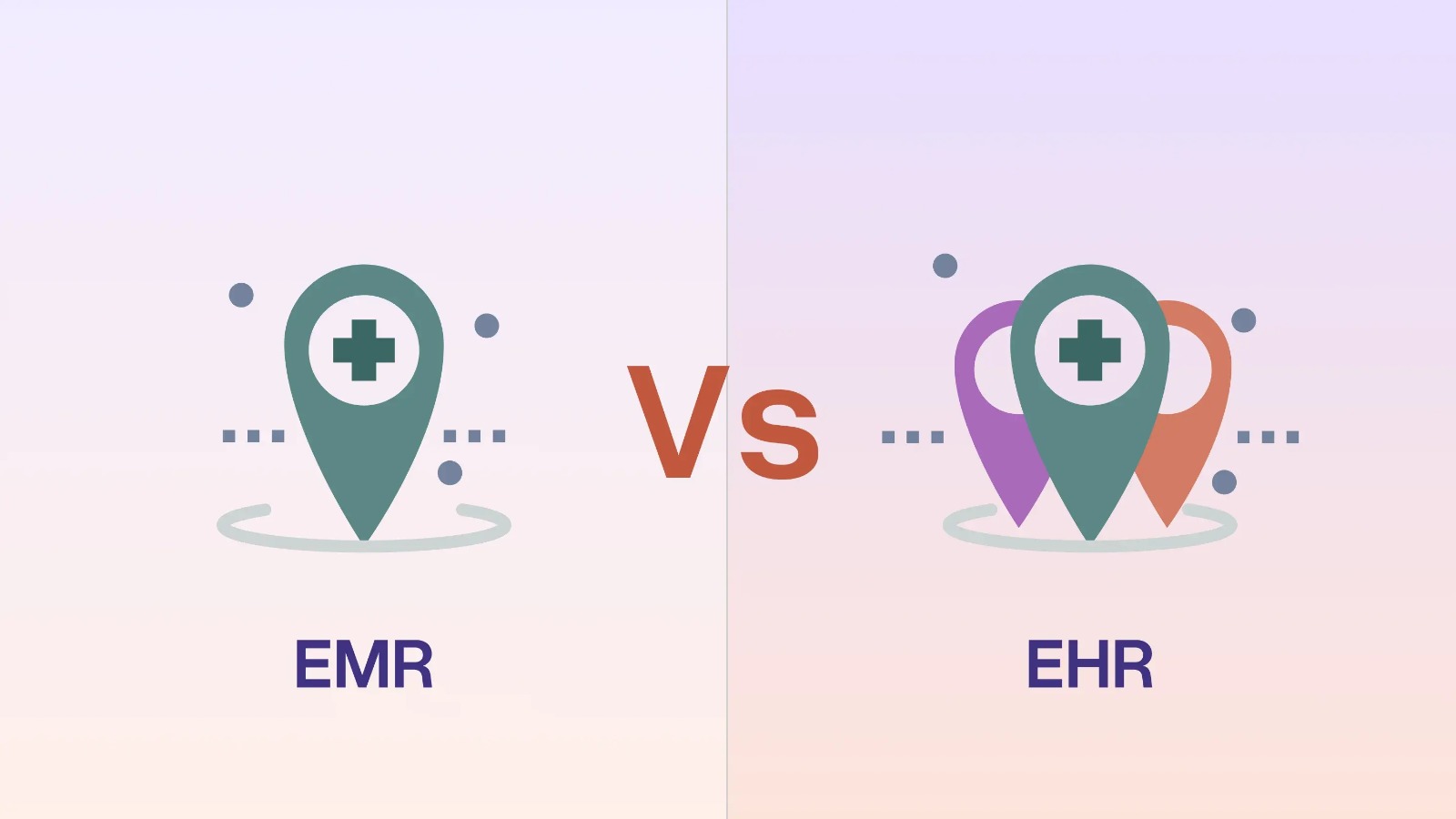
An Electronic Medical Record (EMR) is a digital version of a patient’s chart within a single practice or hospital. It contains medical and treatment history, but the data typically stays within that one organization and isn’t easily shared with other providers.
What Is an EHR?
An Electronic Health Record (EHR) is a more comprehensive, patient-centered record designed to be shared across multiple healthcare providers. It includes a patient’s complete health history — from multiple doctors, hospitals, and specialists — and is built for interoperability between different healthcare systems.
The Interoperability Gap, by the Numbers
The real-world gap between EMR and EHR shows up clearly in adoption data. Even in healthcare systems where basic electronic records are now nearly universal, research suggests only around 30% of providers have achieved full interoperability — the ability to send, receive, and use patient data seamlessly across different organizations. That gap is exactly what separates a true EHR from a system that simply digitized paper charts. Researchers have linked interoperability shortfalls like this to billions of dollars in avoidable costs each year, from duplicate tests to delayed referrals.
Key Differences
| Aspect | EMR | EHR |
|---|---|---|
| Scope | Single practice or hospital | Across multiple providers |
| Data Sharing | Limited, stays in-house | Designed for sharing and interoperability |
| Patient View | Snapshot within one facility | Complete longitudinal health history |
| Best Suited For | Single clinics, smaller hospitals | Multi-specialty hospitals, networks |
| Patient Access | Often limited | Frequently includes patient portals |
Which Does Your Hospital Need?
1. Hospital Size and Structure
A single-location clinic with minimal need for external data sharing may find an EMR sufficient, while multi-specialty or multi-branch hospitals benefit more from an EHR’s interoperability.
2. Referral and Collaboration Needs
If your hospital frequently refers patients to specialists or labs outside the organization, an EHR makes that data exchange significantly smoother.
3. Patient Portal Expectations
Hospitals wanting to offer patients access to their own health records, test results, and prescriptions typically require EHR-level functionality.
4. Long-Term Growth Plans
Hospitals planning to expand to multiple locations or integrate with external healthcare networks should invest in EHR systems from the outset to avoid costly migrations later.
5. Regulatory and Compliance Requirements
As healthcare data-sharing regulations evolve, EHR systems are generally better positioned to meet interoperability and compliance standards.
How MedXL Helps Hospitals
At MedXL, we help hospitals implement the right patient record system for their size and goals — whether that’s a focused EMR or a fully interoperable EHR. Our solutions include:
- Electronic Medical Records (EMR)
- Electronic Health Records (EHR)
- Hospital Management System (HMS) Integration
- Laboratory Information System (LIS)
- Secure Patient Portals
Frequently Asked Questions
Conclusion
EMR and EHR aren’t simply two names for the same thing — they represent different levels of data depth, accessibility, and interoperability. Choosing the right one depends on your hospital’s size, referral patterns, and growth plans.