Introduction
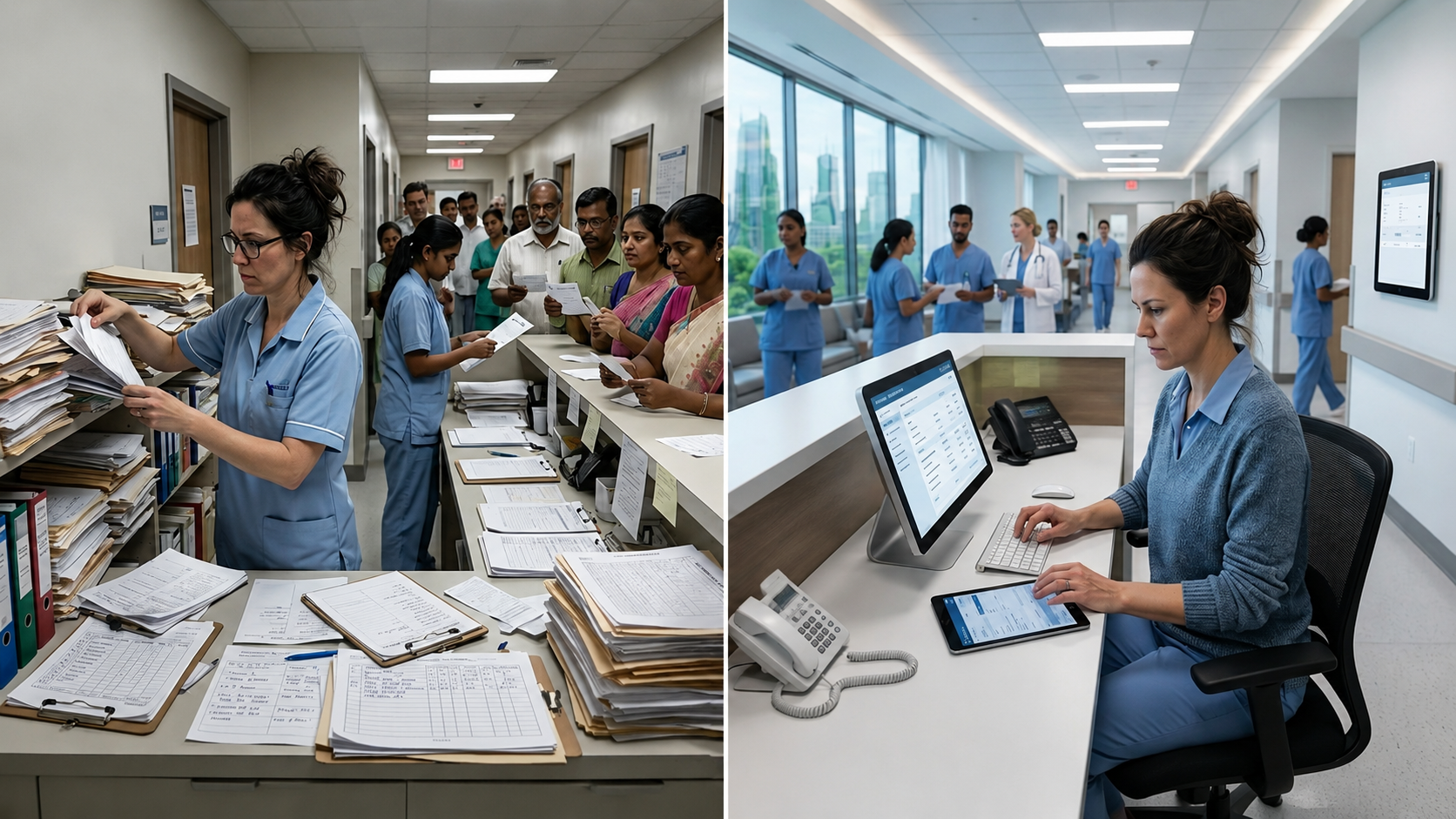
With dozens of Hospital Management System (HMS) options available in the market, choosing the right one for your hospital can feel overwhelming. The wrong choice can mean wasted budget, staff resistance, and operational disruption — while the right one transforms how your hospital runs. Here's what to evaluate before making a decision.
Why Choosing the Right HMS Matters
An HMS isn't a one-time purchase — it becomes the operational backbone of your hospital for years. Switching systems later is costly and disruptive, which is why getting the decision right from the start matters far more than chasing the lowest price.
The HMS Market Is Growing Fast
India's hospital management software market is expanding quickly, projected to grow from roughly $12.4 billion in 2025 to $25.7 billion by 2031. That means more vendors, more overlapping feature lists, and more room to make an expensive mistake if you don't evaluate carefully.
Key Factors to Consider
1. Scalability
Choose an HMS that can grow with your hospital, whether you're adding beds, departments, or additional locations, without requiring a complete system overhaul.
2. Ease of Use for Staff
A powerful system is only useful if your staff can actually use it. Look for an intuitive interface that doesn't require extensive technical training.
3. Integration Capabilities
Your HMS should integrate smoothly with your website, EHR/EMR, laboratory systems, and billing — rather than operating as a disconnected silo.
4. Data Security & Compliance
Patient data is sensitive. Ensure the system offers encryption, role-based access controls, and compliance with healthcare data regulations.
5. Vendor Support & Training
Implementation doesn't end at installation. Choose a vendor that provides ongoing training, technical support, and timely updates.
6. Cost & Return on Investment
Look beyond the upfront price to long-term value: reduced errors, faster patient processing, and lower administrative overhead all contribute to ROI.
How MedXL Helps Hospitals
At MedXL, we help hospitals choose and implement the right Hospital Management System for their specific size, specialty, and growth plans. Our solutions include:
- Hospital Management System (HMS)
- Electronic Health Records (EHR)
- Laboratory Information System (LIS)
- Online Appointment Booking
- Professional Hospital Websites
- Healthcare Digital Transformation Services
Frequently Asked Questions
Conclusion
Choosing the right HMS is one of the most important technology decisions your hospital will make. By evaluating scalability, usability, integration, security, support, and cost, you can select a system that genuinely improves operations — not just adds complexity.