Introduction
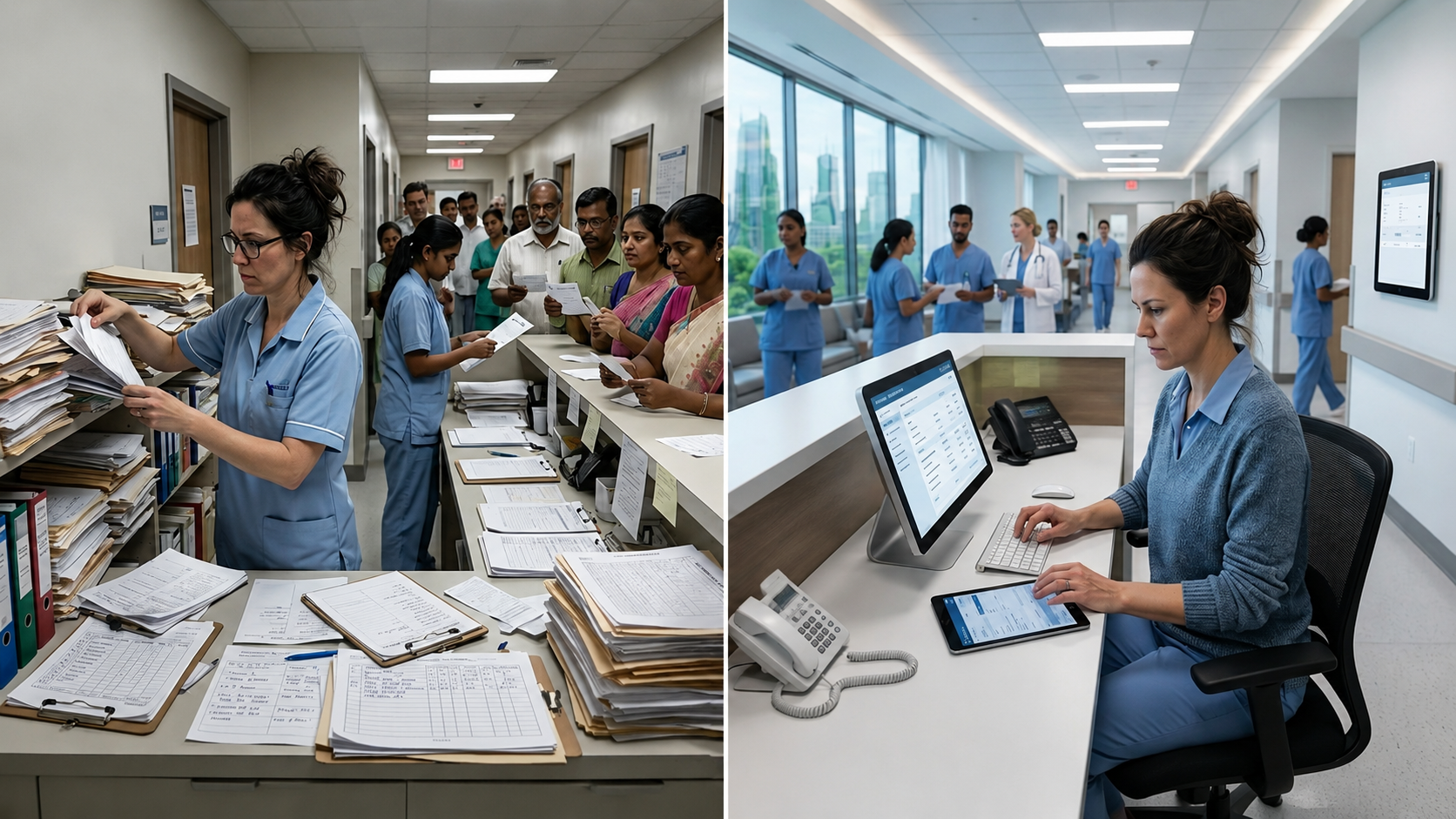
Many hospital administrators believe that avoiding IT investment saves money. The reality is often the opposite. Running a hospital without proper IT systems can create hidden costs that affect revenue, staff productivity, patient satisfaction, compliance, and long-term growth.
While these costs may not always be visible on financial statements, they accumulate over time through inefficiencies, billing mistakes, delayed decisions, and operational challenges. Understanding these hidden expenses is the first step toward building a more efficient healthcare organization.
The Hidden Costs of Operating Without IT Systems
1. Revenue Leakage from Billing Errors
Without integrated billing and hospital management systems, chargeable services can easily go unrecorded. Consultations, laboratory investigations, procedures, or medications may be provided but never billed properly.
Even small billing inaccuracies repeated across hundreds of patients can lead to substantial revenue losses every month.
2. Staff Inefficiency and Overtime
Manual paperwork consumes valuable time for nurses, administrative staff, and billing teams. Employees spend hours entering data, locating records, preparing reports, and reconciling information that could otherwise be automated.
This increases overtime costs while reducing the time available for patient care and operational improvements.
3. Patient Attrition Due to Poor Experience
Long waiting times, misplaced records, confusing billing processes, and delayed access to medical information can frustrate patients. Dissatisfied patients are less likely to return and may recommend competing healthcare providers instead.
Patient retention is often more cost-effective than acquiring new patients, making a positive patient experience critical for sustainable growth.
4. Compliance Risks and Audit Challenges
Healthcare organizations must maintain accurate records to support accreditation requirements, taxation, privacy regulations, and operational audits. Paper-based or fragmented systems make compliance significantly more difficult.
Incomplete documentation can increase the risk of audit findings, penalties, and operational disruptions.
5. Poor Decision-Making Due to Limited Data
Hospital leadership teams rely on accurate information to make strategic decisions. Without access to real-time data, it becomes difficult to track revenue performance, patient volumes, department efficiency, or operational trends.
As a result, decisions are often based on assumptions rather than measurable insights.
6. Higher Staff Turnover
Doctors, nurses, and administrators increasingly expect modern digital tools to support their daily work. Outdated systems can create frustration, increase workload, and contribute to employee burnout.
Replacing experienced staff requires significant investments in recruitment, onboarding, and training.
How Technology Helps Reduce These Costs
Modern healthcare technology enables hospitals to automate workflows, improve billing accuracy, streamline operations, and gain better visibility into performance metrics.
- Automated patient registration and billing
- Centralized electronic patient records
- Real-time operational and financial reporting
- Improved compliance and audit readiness
- Faster access to patient information
- Better coordination across departments
- Enhanced patient experience and retention
How MedXL Helps Hospitals
MedXL provides healthcare technology solutions designed to help hospitals improve operational efficiency, reduce revenue leakage, and support long-term digital transformation.
- Hospital Management System (HMS)
- Electronic Health Records (EHR)
- OP Billing & Revenue Management
- Laboratory Information Management System (LIMS)
- Real-time analytics and reporting
- ABDM-ready healthcare solutions
- Healthcare IT consulting and digital transformation support
Conclusion
The cost of operating without proper IT systems extends far beyond technology budgets. Revenue leakage, inefficient workflows, compliance challenges, and poor patient experiences can significantly impact hospital performance over time.
Investing in the right healthcare technology helps hospitals improve efficiency, strengthen financial performance, and create a better experience for both patients and staff.